

Pet Water Fountain Guide: Stainless Steel vs Plastic & OEM Design Insights
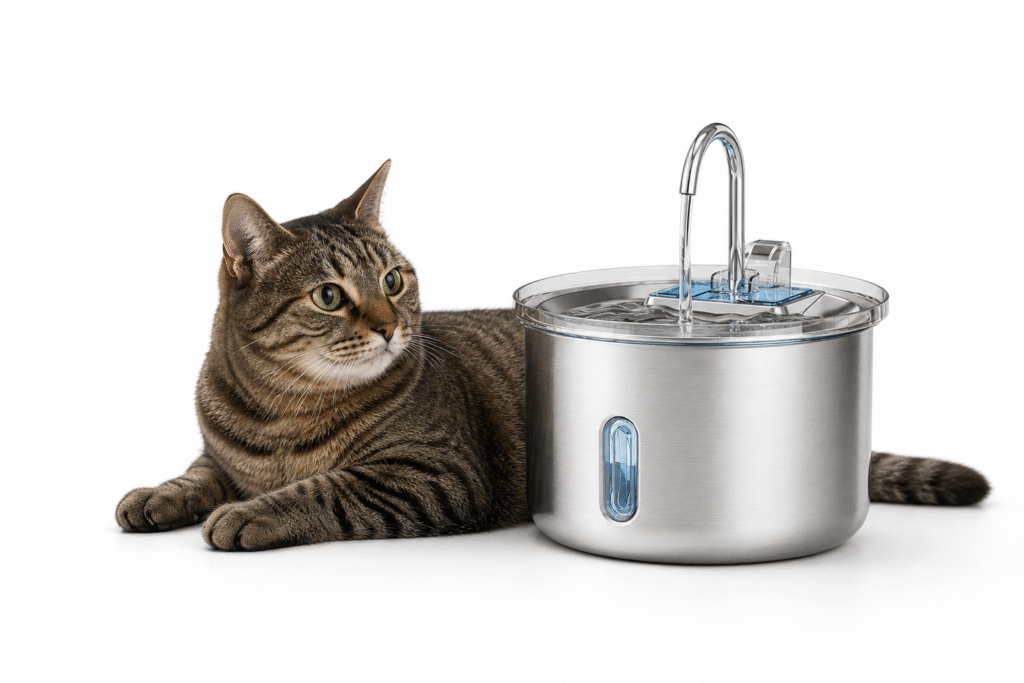
Introduction: Choosing the Right Pet Water Fountain Matters
A pet water fountain is an essential product that directly affects your pet’s hydration and health. In the global pet care market, the most common question remains:
👉 Should I choose a stainless steel pet water fountain or a plastic one?
From both a consumer and manufacturing perspective, the answer depends on hygiene perception, structure design, and long-term usability.
1. Market Trend: Why Stainless Steel Pet Water Fountains Are Growing
The pet water fountain market has been steadily shifting toward stainless steel drinking-contact designs.
Key trends include:
- Increasing pet humanization worldwide
- Stronger focus on hygiene and water safety
- Demand for more durable and premium pet products
- E-commerce platforms pushing higher product standards
As a result, stainless steel cat water fountains and dog water fountains are becoming the preferred choice in mid-to-high-end markets.
2. Consumer Psychology: Why Stainless Steel Feels Safer
Pet owners often associate material choice with safety.
Plastic is commonly perceived as:
- Easier to scratch and harbor bacteria
- More likely to retain odors
- Less durable over time
In contrast, stainless steel creates a stronger sense of trust:
- Clean and “medical-grade” appearance
- Widely used in food and healthcare applications
- More premium and hygienic perception
👉 This psychological factor plays a major role in purchasing decisions.
3. OEM/ODM Perspective: Material Is Only One Part of the Design
From an OEM/ODM manufacturing point of view, most pet water fountains are not made from a single material.
A standard industry structure is:
- Drinking tray / water bowl → Stainless steel
- Housing / structure → ABS, Stainless Steel or PC engineering plastic
- Pump system → Plastic + silicone components
👉 This hybrid structure is widely used because it balances:
- Hygiene performance
- Structural flexibility
- Cost efficiency for mass production
As a pet water fountain OEM manufacturer, this is currently the most practical and scalable solution for global brands.
4. Hygiene Insight: Why Design Matters More Than Material Alone
Even with high-quality materials, hygiene depends heavily on design and maintenance.
Over time, water systems may develop a biofilm, a thin layer of microorganisms that forms inside wet environments.
Key design factors that affect cleanliness include:
- Whether the fountain is easy to disassemble
- Whether there are hidden dead zones
- Whether the pump can be cleaned easily
- Whether water flow reduces stagnation
👉 A well-designed plastic fountain can perform better than a poorly designed stainless steel one.
5. Usage Tips: How to Keep a Pet Water Fountain Clean
Regardless of material, proper maintenance is essential:
- Replace water every 2–3 days
- Clean the fountain at least once per week
- Regularly clean the pump and hidden components
- Deep clean if surfaces feel slippery or develop odor
👉 Cleanliness is more important than material alone when it comes to pet health.
Conclusion: The Best Pet Water Fountain Is a Balanced Design
The shift toward stainless steel pet water fountains is driven by both market trends and consumer psychology. However, the most effective product design is not about choosing one material over another.
👉 The best solution is a hybrid structure with stainless steel contact surfaces + smart engineering design.
From an OEM/ODM perspective, success in this category comes from balancing:
- Material selection
- Structural design
- Cost control
- User cleaning experience
7CATS-SMARTPET | Simplify Care, Amplify Love